How to Clean Solar Panels: Step-by-Step DIY & Pro Guide (2026)
Knowing how to clean solar panels yourself takes 30 to 45 minutes and a $50 toolkit, but the wrong method (pressure washing, soap, or walking on the glass) can void a warranty. Below is the 7-step routine that Hongyu ‘s warranty team confirms is safe for any certified module, plus the five situations where hiring a pro wins.
Key Takeaways
- You can clean solar panels yourself in 30 to 45 minutes for a 20-panel array using a $50 toolkit.
- The 7-step routine below preserves all Tier-1 warranties, including Hongyu solar panels .
- Skip DIY if your roof pitch exceeds 4/12, your home is two stories or taller, or your panels are heavily soiled by wildfire ash or industrial fallout.
- Professional cleaning runs $150 to $330 per residential system as of May 2026.
- Five common mistakes (pressure washing, hot-panel rinses, soap, walking on glass, hard tap water) void warranties and microcrack cells.
- Clean 2 to 4 times per year in most US climates. More in arid or pollen-heavy regions.
Table of Contents
- When should you clean solar panels?
- What you need to clean solar panels yourself
- How to clean solar panels: the 7-step routine
- Step 1: Pick the right weather window
- Step 2: Shut the system down
- Step 3: Knock loose debris off dry
- Step 4: Rinse top to bottom
- Step 5: Brush stubborn spots wet
- Step 6: Final rinse (deionized if your tap is hard)
- Step 7: Air-dry, then power back on
- How to clean solar panels safely (the rules that prevent injuries)
- When to call a professional cleaning service
- What if cleaning does not restore output?
- How to clean solar panels: common mistakes that void warranties
- How often should you clean solar panels?
- Frequently Asked Questions
- Can I clean solar panels with just a hose?
- Is it OK to clean solar panels in the rain?
- Can I use vinegar to clean solar panels?
- Will rain clean solar panels enough?
- What is the best time of day to clean solar panels?
- Do robots or automatic cleaners work?
- Can I clean solar panels with a soft brush only, no water?
- How do I clean solar panels with hard water?
- Does cleaning solar panels really increase output?
- Should I clean solar panels in winter?
- Sources and references
- Related guides
When should you clean solar panels?
Two signals tell you it is time:
- Visible soiling. Standing 20 feet from the array, you can see streaks, bird droppings, pollen yellowing, or ash. That is the threshold for action.
- Production drop. Your monitoring app shows a 5% or greater drop versus the same week last year, with no shading or weather change to explain it.
In US climates, the typical cadence is:
| Region | Cleanings per year |
|---|---|
| Pacific Northwest, Northeast, Florida (high rainfall) | 1 |
| Midwest, Mountain West (moderate) | 2 |
| Southwest, Central Valley, high desert (arid) | 3–4 |
| Coastal (within 5 miles of ocean) | 4 (rinses) |
| Agricultural / livestock-adjacent | 4 |
| Wildfire smoke years (West Coast) | Add 1 cleaning per heavy smoke event |
For the regional schedule expanded by zip code, see the solar panel maintenance pillar.
What you need to clean solar panels yourself
Total toolkit cost: under $50 if you do not own these already.
| Item | Purpose | Cost |
|---|---|---|
| Garden hose with flow nozzle | Primary rinse (no pressure washer) | Owned |
| Soft long-handled extension brush | Reach panels from ground or low ladder | $15–$25 |
| 5-gallon jug of deionized or distilled water | Streak-free final rinse if tap water above 100 ppm TDS | $8–$12 |
| Clean microfiber mop head | Stubborn spots, bird droppings | $8 |
| TDS meter (one-time purchase) | Confirm if you need deionized water | $12 |
| Safety harness if on roof | Mandatory above 3/12 pitch or 8 ft | $40 (rental) |
What not to use:
- Pressure washer (any PSI above 1,500 voids most Tier-1 warranties)
- Dish soap, Windex, or any surfactant (residue streaks the glass)
- Metal scraper, razor blade, or abrasive pad (destroys anti-reflective coating)
- Hard tap water above 100 ppm TDS without a deionized final rinse (leaves mineral spots that reduce output 1 to 3%)
How to clean solar panels: the 7-step routine
This procedure preserves Tier-1 warranties under IEC 61215 and UL 61730. It assumes a single-story home with low to moderate roof pitch. For two-story homes or pitches above 4/12, skip to the pro section.
Step 1: Pick the right weather window
Clean on a cool, overcast morning. Panel surface temperature should be below 100 °F when you start. Cold water on 140 °F glass in midday sun triggers thermal-stress microcracks that show up on next month’s production curve.
Step 2: Shut the system down
Turn off the inverter, then open the DC disconnect at the array. Confirm the inverter display reads zero output. Wet glass over live cells is a shock hazard. This step is non-negotiable.
Step 3: Knock loose debris off dry
Use the soft brush dry. Sweep off leaves, pine needles, twigs, and any large debris before adding water. Wet debris smears and bonds to the glass.
Step 4: Rinse top to bottom
Spray the panels with the garden hose on flow setting, working from the highest panel down. Most dust and pollen come off here without any brush contact. Keep the nozzle at least 12 inches from the glass.
Step 5: Brush stubborn spots wet
For bird droppings, sap, or bonded ash, brush wet with the long-handled brush. Use light pressure and circular motion. Never push hard. The cells underneath are silicon wafers, not tempered steel.
Step 6: Final rinse (deionized if your tap is hard)
If your tap water reads above 100 ppm TDS (check once with the meter, then assume), rinse the final pass with deionized or distilled water from the 5-gallon jug. Hard tap water leaves mineral spots that drop output 1 to 3% until the next storm dissolves them.
Step 7: Air-dry, then power back on
Let the panels dry fully (10 to 15 minutes on a clear morning). Re-close the DC disconnect, then power the inverter back on. Confirm the monitoring app reads expected output for the conditions.
Total time for a 20-panel array: 30 to 45 minutes.
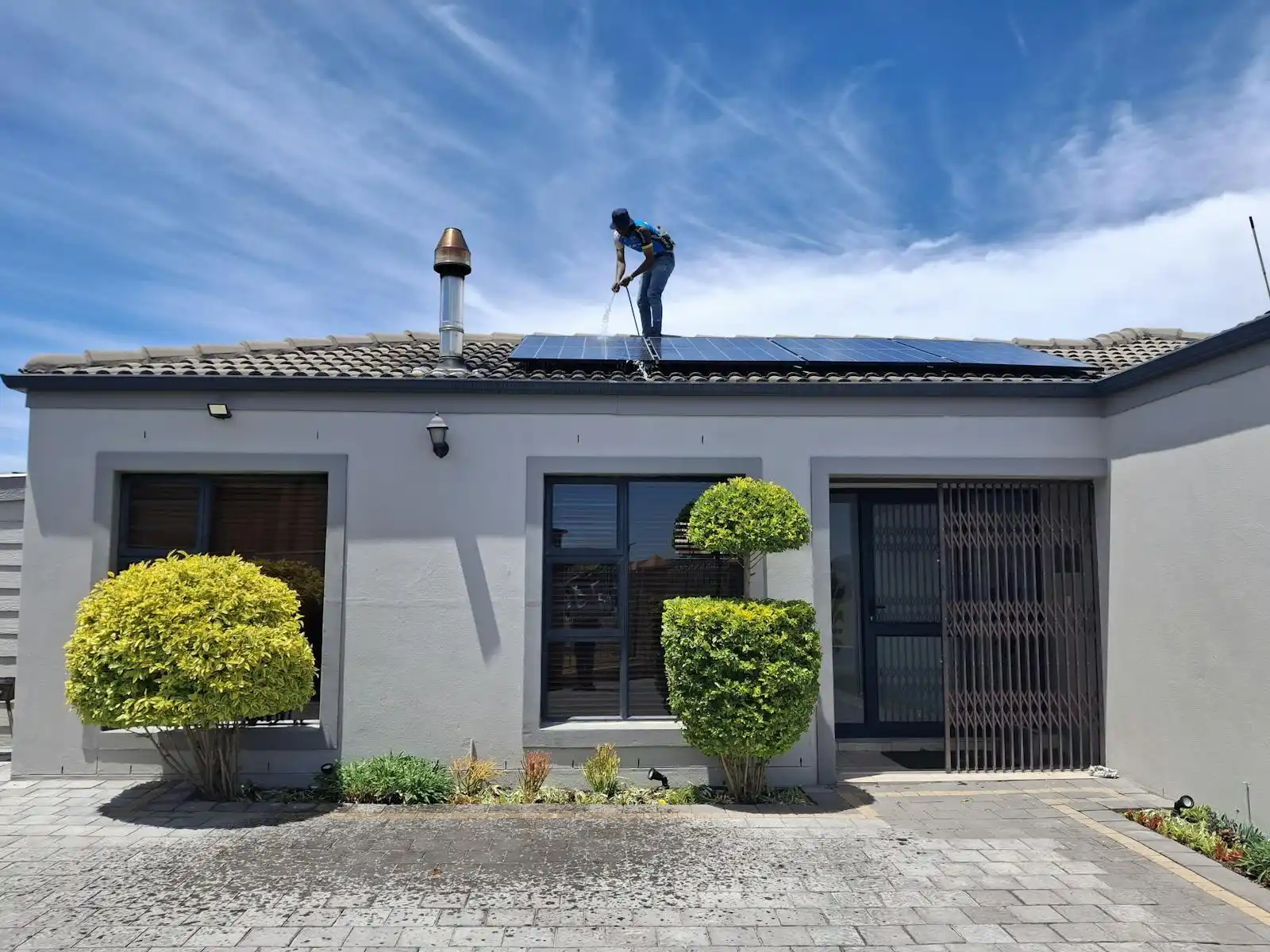
For the rooftop-specific safety adaptation including ladder placement and harness anchoring, see how to clean rooftop solar panels.
How to clean solar panels safely (the rules that prevent injuries)
Falls from ladders are the number-one home-maintenance injury in the US. Solar cleaning adds two unique hazards on top: electrical and thermal.
Mandatory safety rules:
- Never clean during a thunderstorm or within 30 minutes of one
- Never clean if winds exceed 15 mph
- Never use a metal ladder near the array (aluminum is conductive)
- Never carry the hose up the ladder. Use a long-handled brush from the ground or roof.
- Never step on a panel. Tempered glass tolerates hail but not point loads. One 180 lb footstep can microcrack a cell.
- Always wear soft-soled shoes if on the roof. No work boots with hard treads on shingles.
- Always have a spotter on the ground when above 8 feet.
When to call a professional cleaning service
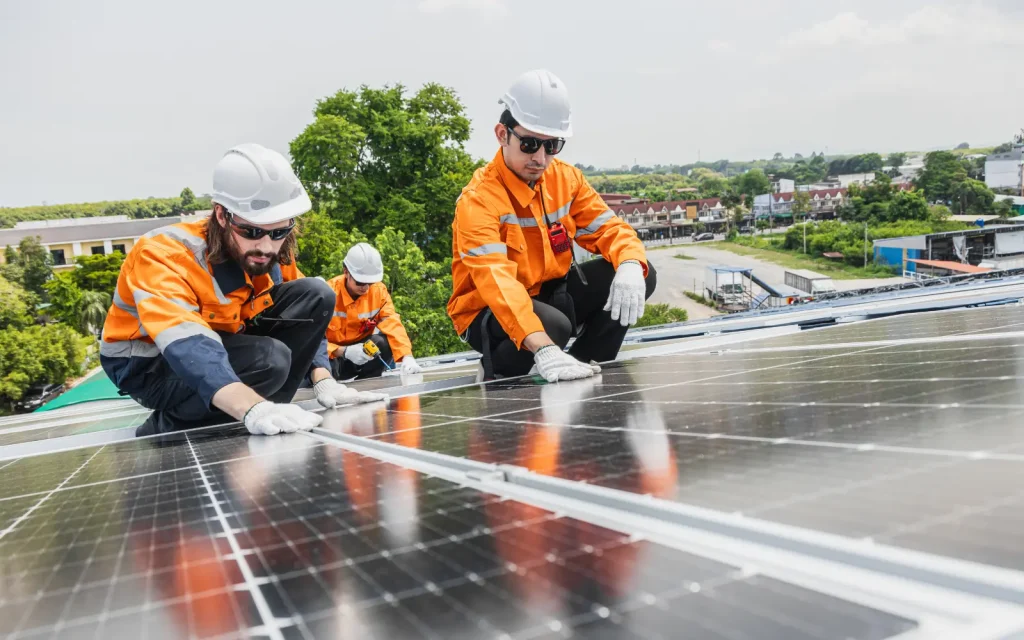
Hire a pro in any of these five situations:
- Roof pitch above 4/12. The threshold where you would hesitate without a safety harness.
- Two-story or taller homes. Ladder falls compound with height.
- Flat commercial-style roofs with OSHA fall-protection requirements. Anchor points and edge guards are required.
- Heavy ground-in soiling. Wildfire ash, agricultural drift, industrial fallout, or three-plus years of neglect.
- Warranty conditions that require certified cleaners. Some Tier-1 modules void warranty after amateur cleaning with hard tap water or unapproved tools. Read your spec sheet, or contact the manufacturer.
What to expect from a pro visit:
- $150 to $330 per residential system, roughly $8 to $15 per panel as of May 2026
- Deionized water as the cleaning medium (most pros bring their own)
- Soft extension brushes or telescoping water-fed poles
- Drone inspection add-on ($50 to $100) for hot-spot detection
- Insurance proof and worker’s comp documentation
Learn how to choose a solar panel cleaning company: best solar panel cleaning companies in 2026.
What if cleaning does not restore output?
If your monitoring app still shows a year-over-year drop greater than 5% after a thorough cleaning, the issue is not dirt. Three common causes:
- New shade: A tree, neighboring construction, or rooftop equipment that grew or was installed since last year. Check at the same time of day and same season for fair comparison.
- Cell-level damage: Microcracks from prior thermal stress or hail show as production drops on individual panels. Open your inverter’s per-panel data.
- Inverter or wiring fault: Whole-system drops with the same weather signal an inverter approaching end of life or rodent damage to wiring.
Diagnostic tree: solar panel wiring issues.
How to clean solar panels: common mistakes that void warranties
Our warranty-claim data shows the same five mistakes account for the majority of cleaning-related damage:
- Pressure washing. Any PSI above 1,500 lifts panel seals and voids Tier-1 warranties.
- Cleaning hot panels with cold water. Thermal-stress microcracks reduce output by 2 to 5% over time and are visible on next month’s production curve.
- Soap or glass cleaner. Surfactant residue streaks the glass and accelerates re-soiling on the next dust event.
- Walking on glass. Tempered glass cracks at point loads, not blunt impact. One footstep can microcrack a cell.
- Hard tap water with no final rinse. Mineral spots reduce output 1 to 3% and bond more tightly after each thermal cycle.
The pillar guide covers the full warranty-voiding list in detail: solar panel maintenance: what voids warranties.
How often should you clean solar panels?
Most US homeowners need 2 to 4 cleanings per year. The exact cadence depends on rainfall, pollen, dust, and bird activity.
A 2013 UC San Diego soiling study of 186 California systems over 145 days found average production loss of only 0.05% per day from soiling, capped at about 1.5% before the next rain event. Over-cleaning costs more in service fees than the production gain. Under-cleaning costs less than most homeowners expect.
A practical heuristic: if you cannot remember the last cleaning and you can see streaks from 20 feet away, schedule one. If you cleaned in the last 60 days and your monitoring shows expected output, skip this round.
Frequently Asked Questions
Can I clean solar panels with just a hose?
Yes, for light dust and pollen in most climates. A flow-nozzle garden hose handles 80% of residential cleaning. Add a soft brush for bird droppings, ash, or bonded grime, and a deionized final rinse if your tap water is hard.
Is it OK to clean solar panels in the rain?
Light rain assists cleaning by softening dust. Heavy storms with thunder are unsafe. Never use a ladder during active rain.
Can I use vinegar to clean solar panels?
No. Vinegar is acidic and degrades the EVA encapsulant over time. Plain water plus a soft brush is enough for any soiling that rain cannot handle.
Will rain clean solar panels enough?
In rainy climates (Pacific Northwest, Northeast, Florida), rain handles most of the work. One professional or DIY cleaning per year covers the gap. In arid climates, rain is not enough.
What is the best time of day to clean solar panels?
Cool, overcast mornings before 10 a.m. Panel surface temperature should be below 100 °F before any water touches the glass.
Do robots or automatic cleaners work?
Robotic solar panel cleaners exist for utility-scale arrays. For residential systems they are usually not cost-effective. The cleaning is required too rarely to amortize a $500 to $2,000 robot.
Can I clean solar panels with a soft brush only, no water?
Dry brushing removes loose dust but leaves a residue that smears on the next rain. Always finish with a water rinse, even if light.
How do I clean solar panels with hard water?
Use deionized or distilled water for the final rinse. Tap water above 100 ppm TDS leaves mineral spots that reduce output 1 to 3% until the next storm. A 5-gallon jug at $8 to $12 covers an entire cleaning cycle.
Does cleaning solar panels really increase output?
By 1 to 5% after a typical cleaning in most climates. Heavy soiling can show 10% or more recovery. Track output before and after with your monitoring app to confirm.
Should I clean solar panels in winter?
Knock heavy wet snow off only if you can do it from the ground with a foam roof rake. Never use a metal tool. Light dry snow slides off on its own. Save the full cleaning for the next mild morning.
Sources and references
- Jacobs School of Engineering, UC San Diego (2013). Residential Solar Soiling Study (Mike Sankarapandian Kris et al.). Average soiling loss 0.05% per day, 1.5% cap between rain events.
- NREL (2023). PV Module Reliability Benchmark. Median degradation 0.5%/year for post-2010 modules.
- IEC (2021). IEC 61215: Terrestrial photovoltaic modules – Design qualification and type approval. https://webstore.iec.ch/en/publication/61345.
- UL (2017). UL 61730: Photovoltaic module safety qualification.
Related guides
- Solar Panel Maintenance: Cleaning, Lifespan & Repair Guide
- Do Solar Panels Need to Be Cleaned?
- How to Clean Rooftop Solar Panels Safely
- Best Solar Panel Cleaning Companies 2026
- Best Solar Panel Cleaning Solutions & Tools
- Solar Panel Cleaning Costs Explained
- How Long Do Solar Panels Last?
About the Author:
By Peter: Peter is a Senior PV & Energy Storage Engineer at Hongyu Supply Chain. As a seasoned expert in the renewable energy industry, he focuses on solar power generation, smart energy storage systems, and clean energy supply chains, delivering valuable technical analysis and industry trend insights to global audiences.
Disclosures
This guide is editorial. We do not accept payment for placement or rankings.
Hongyu manufactures residential solar panel modules. We do not provide cleaning services directly. No specific cleaning company is endorsed in this guide.
Pricing figures reflect May 2026 US market averages. Final pricing varies by region, roof complexity, and provider tier.