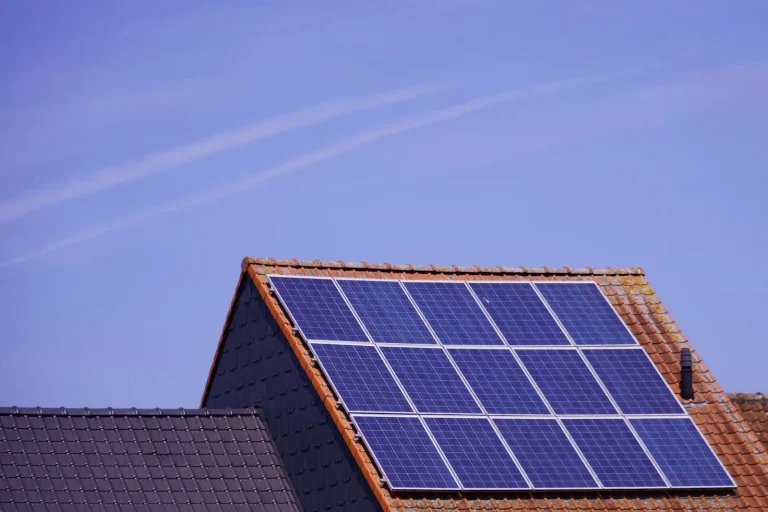
Solar Panel Cleaning: When, How, and Whether It’s Worth It (2026)
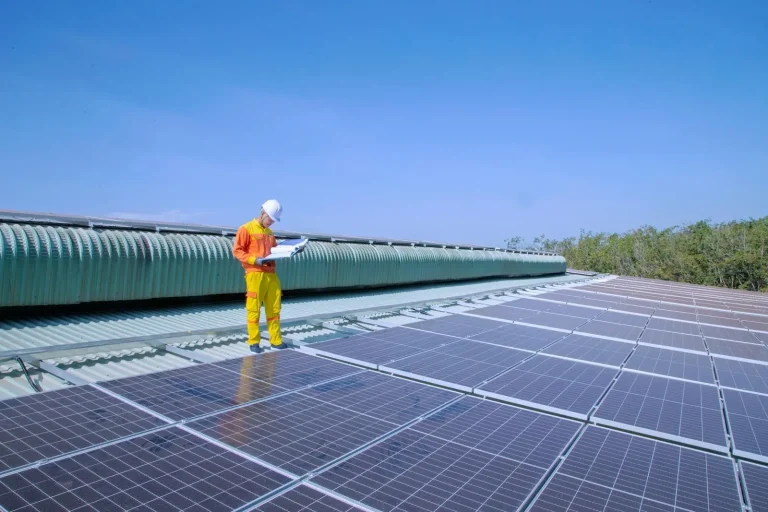
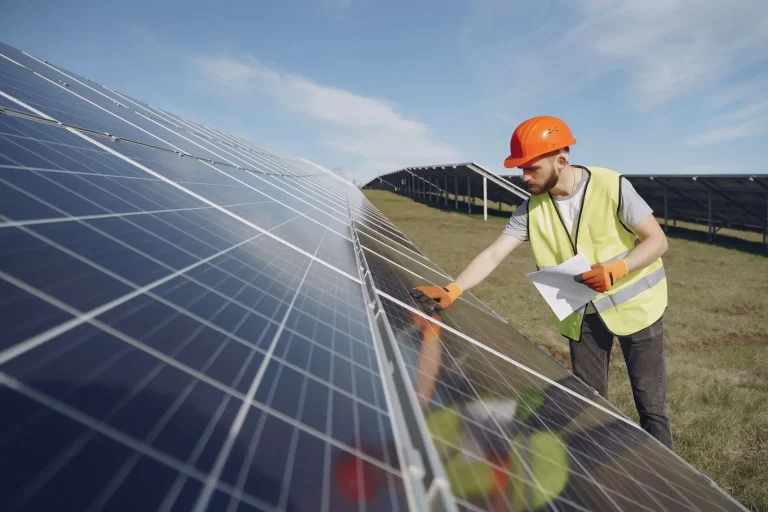
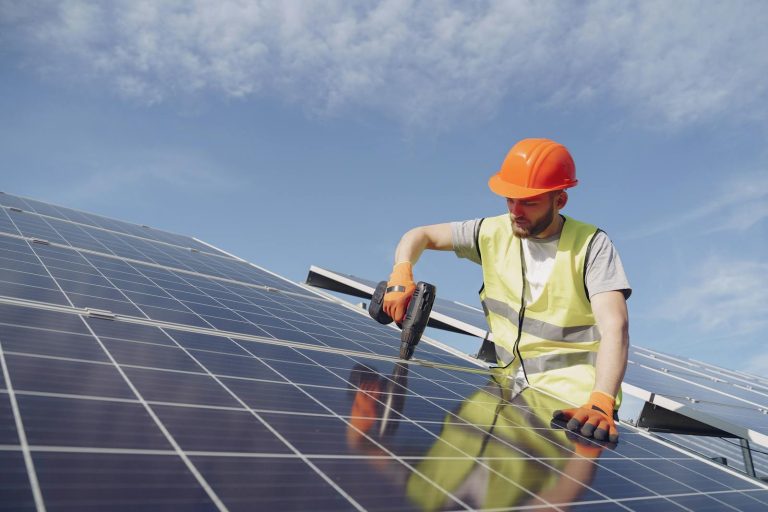
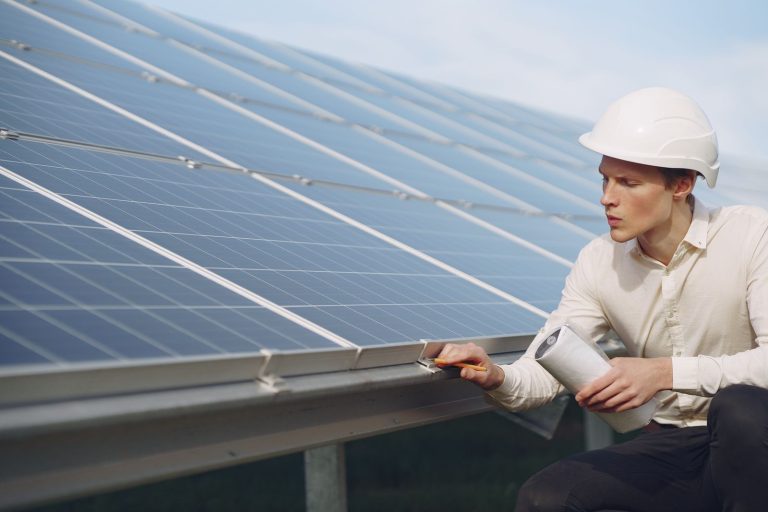
Solar panel cleaning is worth doing only once or twice a year for most homes, and in rainy climates the rain handles most of it for free. This guide from Hongyu, a Tier-1 solar panel manufacturer, covers when cleaning actually pays off, how to do it without voiding your warranty, and the per-region payback math behind a $250 service call. Figures draw on NREL soiling research and 2026 US industry-survey pricing.
Key Takeaways
- Most residential solar panels don’t need cleaning more than once or twice a year (NREL, 2023)
- Skipping cleaning typically costs 1.5% to 6% of annual output, depending on climate (NREL, 2023)
- Pressure washing, abrasive pads, and household glass cleaner can void module warranties
- Rainwater handles light soiling well in most humid US regions; dry climates need help
- A professional cleaning service in 2026 runs roughly $150 — $400 for a typical home array (industry survey, 2026)
Table of Contents
- Do solar panels actually need to be cleaned?
- How often should you clean solar panels by US region?
- Arid Southwest (Phoenix, Las Vegas, Albuquerque)
- Humid Southeast (Atlanta, Miami, Houston)
- Pacific Northwest (Seattle, Portland)
- Mountain West (Denver, Salt Lake City)
- Northeast (Boston, New York)
- What’s the best way to clean solar panels? Four methods that work
- Method 1: Rinse from the ground
- Method 2: Roof access with proper safety
- Method 3: Robotic cleaners
- Method 4: Professional cleaning service
- What should you never do when cleaning solar panels?
- What does cleaning actually recover?
- Output recovery by soiling level
- Why panel tilt matters
- When the math says skip it
- Does cleaning extend solar panel lifespan?
- Should you DIY or hire a service? The cost math
- DIY annual cost
- Professional service annual cost
- Frequently asked questions
- How often should I clean my solar panels?
- Does rain clean solar panels well enough?
- Can I use a pressure washer on solar panels?
- What soap is safe for solar panel glass?
- Does cleaning solar panels really increase output?
- Should I clean my solar panels myself or hire a service?
- Can dirty solar panels void my warranty?
- When is the best time of day to clean solar panels?
- Do robotic solar panel cleaners work?
- How much output do solar panels lose if you never clean them?
- Sources
- Next reads
Do solar panels actually need to be cleaned?
Most of the time, yes, but lightly and not often. The NREL Soiling Loss Research found that US residential solar panels lose between 1.5% and 6% of annual output to dust, pollen, and grime (NREL, 2023). The wide range matters. A panel in rainy Seattle behaves nothing like a panel near a Phoenix construction site.
Four conditions change the answer for your roof: your climate zone, your panel tilt, what’s around your house, and your module type. Steep panels shed water and dust faster. Flat-mount arrays do not. Surrounding trees, busy roads, and farm fields all push your cleaning frequency up. A panel on a ground-mount array next to an unpaved driveway behaves more like a Phoenix panel than a suburban one, even in a humid state.
Your module type matters too. Bifacial panels collect dust on both sides, but the back side rarely gets cleaned. Glass-on-glass modules track soiling differently from glass-on-polymer backsheet modules.
Real Numbers: 1.5% – 6% is the typical annual output loss from soiling on US residential arrays (NREL, 2023). The high end applies to arid and dusty regions.
For a deeper situation check, see do solar panels need to be cleaned.
How often should you clean solar panels by US region?
Most articles give you one answer. We give you five. NREL’s regional soiling data shows dust deposition rates vary by more than 4× across US climates (NREL, 2023). Your cleaning calendar should reflect that.
Arid Southwest (Phoenix, Las Vegas, Albuquerque)
Two to four cleanings per year. Dust accumulation here is the highest in the country. Add an extra clean after major dust storms or wildfire smoke events. Output losses without cleaning regularly cross the 5% mark in this zone.
Humid Southeast (Atlanta, Miami, Houston)
One cleaning per year is usually enough. Frequent rain handles routine dust. The exception is spring pollen season. A heavy pollen layer can drop output 2 to 3% in a few weeks.
Pacific Northwest (Seattle, Portland)
Zero to one cleanings per year. Rain handles most soiling here. The real maintenance concern is moss and algae on roof areas surrounding the array, which can spread to panel edges over years.
Mountain West (Denver, Salt Lake City)
One to two cleanings per year. Add an extra session during wildfire smoke events. Smoke deposition has emerged as a measurable soiling factor in this region since 2020.
Northeast (Boston, New York)
One cleaning per year for most homes. Coastal arrays within 5 miles (8 km) of saltwater benefit from a fresh-water rinse twice yearly. Salt accelerates frame corrosion and dulls the anti-reflective coating. Winter cleaning is not required in this region; snow handles most accumulation, and cleaning frozen panels risks thermal shock.
| Climate zone | Cleanings per year | Expected annual output recovery |
|---|---|---|
| Arid Southwest | 2 – 4 | 3 – 6% |
| Humid Southeast | 1 (plus spring pollen) | 1.5 – 3% |
| Pacific Northwest | 0 – 1 | < 1.5% |
| Mountain West | 1 – 2 (plus smoke events) | 2 – 4% |
| Northeast | 1 (coastal: 2) | 1.5 – 3% |
Where does your house fit? If you’re near a desert, a freeway, an active construction site, or a farm field, treat your zone as one tier dustier than the table suggests. The same applies if your roof sits downwind of a bird-heavy tree line. Bird droppings are corrosive and act as point-source soiling; they cause concentrated output loss on individual panels rather than the gradual array-wide drop dust produces. If a single panel suddenly underperforms by 15% or more, check for droppings before checking electrical fault.
What’s the best way to clean solar panels? Four methods that work
Four methods cover almost every residential array. Pick by roof access, panel count, and budget.
Method 1: Rinse from the ground
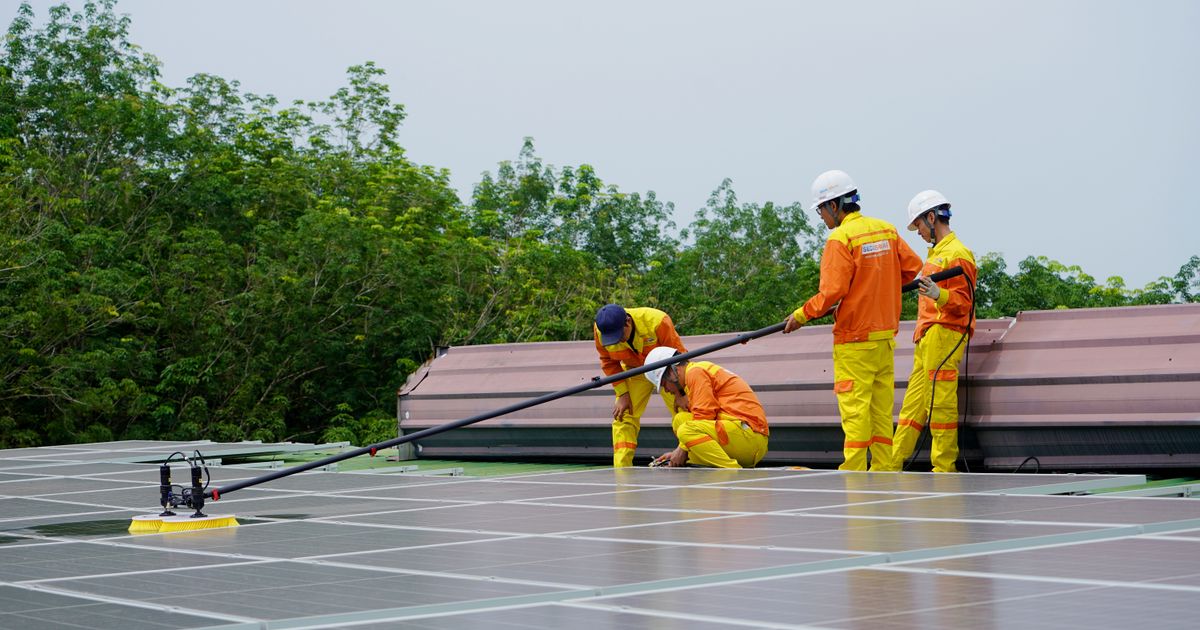
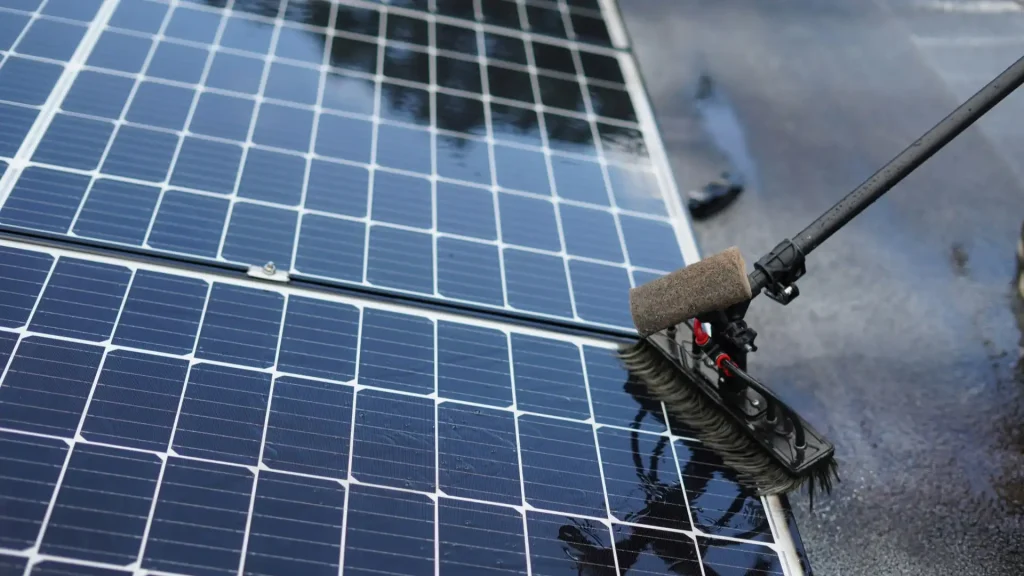
This is the right answer for most homeowners. A garden hose with a soft spray nozzle plus a telescoping water-fed pole brush handles single-story roofs and ground-mount systems. Total time: 30 to 60 minutes for a 20-panel array. Equipment cost: $80 — $200, used over many years.
Use cool water early morning or late evening. Never spray cold water on hot panels mid-day. Thermal shock can crack the glass.
A few practical notes. Tap water leaves mineral spots in hard-water regions, but residue from a single rinse is minor and clears at the next rain. If your water is very hard, a basic in-line filter solves the problem for under $50. Avoid soft-bristle brushes that drag debris across the glass; use a flow-through head designed for panel cleaning instead.
Method 2: Roof access with proper safety
If you cannot reach panels from the ground, hire a professional. OSHA 1926 Subpart M requires fall protection above 6 feet (1.8 m) on residential roofs (OSHA, 2025). Most homeowners do not own a personal fall-arrest system. Ladder cleaning is a leading cause of cleaning-related emergency room visits.
For a step-by-step rooftop protocol when access is unavoidable, see how to clean rooftop solar panels.
Method 3: Robotic cleaners
Several robotic cleaning systems have already achieved successful commercia. For residential, the math rarely pencils out. A residential-rated robot runs $1,500 — $3,500 and replaces maybe four professional cleanings over its useful life. Most homeowners are better served by a service contract or DIY rinsing.
Method 4: Professional cleaning service
You pay for three things: liability insurance, access equipment, and deionized water systems that leave no mineral residue. The 2026 industry survey range across EnergySage Marketplace, Angi, and HomeAdvisor sits at $150 — $400 per residential clean (industry survey, 2026).
When does this make sense? Steep roofs, second-story access, arrays of 25+ panels, or annual cleanings you keep putting off. For a vetted vendor list, see solar panel cleaning company.
For specific products and DIY solutions, see solar panel cleaning solution.
| Method | Annual cost (1–2 cleanings) | Time per clean | Skill required | Warranty risk |
|---|---|---|---|---|
| Ground rinse + pole brush | $0 — $50 (after year 1) | 30 — 60 min | Low | Low |
| Rooftop access (DIY) | $200 — $500 in safety gear | 1 — 2 hours | High | Medium |
| Robotic cleaner | $1,500 — $3,500 one-time | 20 — 40 min (supervised) | Low | Low |
| Professional service | $150 — $800 ($150 — $400 × cleanings) | None for you | None | Lowest |
What should you never do when cleaning solar panels?
Several common cleaning mistakes can void your module warranty. Each item below is paired with the technical reason it matters.
- Pressure washing. High pressure can delaminate the EVA encapsulant layer between the glass and the cells. The damage may not show up immediately. Most manufacturer warranties exclude pressure-washing damage explicitly.
- Abrasive pads, steel wool, or scouring brushes. These scratch the anti-reflective coating on the glass. Coating loss can permanently reduce output by 1 to 3% (IEC, 2023).
- Household glass cleaner. Surfactants in Windex-style cleaners attack the AR coating chemically. Use deionized water, or plain water with a single drop of pH-neutral soap if you must. Vinegar-based cleaners are also off limits; the acid pits aluminum frames over repeated cleanings.
- Cleaning hot panels in midday sun. Surface temperatures can exceed 140°F (60°C). Cold water on hot glass causes thermal shock and microcracks.
- Walking on panels. Microcracks from foot pressure aren’t always visible but show up as hot spots in IR scanning months later. They reduce output and shorten panel life.
- Climbing without fall protection. This is the most preventable cleaning-injury cause. Hire a professional or stick to ground-based tools.
If you notice unusual output drops after cleaning, the cause is often electrical, not the panels themselves. See solar panel wiring issues.
What does cleaning actually recover?
The output gain depends on how dirty the panels were to start with. NREL’s 2023 soiling research breaks recovery into three tiers.
Output recovery by soiling level
- Light soiling (3 — 6 weeks of typical accumulation): 0.5 — 1.5% recovered
- Moderate soiling (a season without cleaning in a moderate climate): 1.5 — 4% recovered
- Heavy soiling (a year of buildup in a dusty climate, or post-event): 4 — 8% recovered
Why panel tilt matters
Steeper panels shed dust naturally. Rooftop residential arrays typically sit at 18° to 30° (about 32% to 58% of full vertical). Anything below 10° accumulates soiling roughly twice as fast.
If your array is nearly flat (common on commercial flat roofs and some ground mounts), cleaning frequency should roughly double the climate-zone numbers above. The same logic applies to carport-mount arrays, which trap dust at the front edge.
When the math says skip it
A $250 cleaning that recovers 1% of output on a 7 kW system in Seattle is not worth it. The system produces about 7,000 kWh per year. One percent is 70 kWh. At $0.13 per kWh, that is $9.10 of recovered revenue. The cleaning pays back in 28 years, longer than the panel warranty.
For the same system in Phoenix with 5% soiling, the cleaning recovers $46 per year. That pays back in roughly 5 years. The math says clean.
A simple test: multiply your system size in kW by 1,400 to estimate annual production in kWh. Multiply that by your electric rate and your soiling percentage. If the resulting dollar number is less than half the cleaning quote, skip it. If it is more than the quote, clean.
For the broader maintenance economics, see solar power maintenance costs.
Does cleaning extend solar panel lifespan?
Cleaning is one of five maintenance levers that extend useful panel life. The other four are electrical inspection, monitoring, tree-shade management, and roof integrity.
Routine cleaning recovers 3 to 8 percentage points of nameplate output at year 25 (NREL, 2025). That sounds like a lot. It is, but only when paired with the other four levers. A clean panel with a corroded MC4 connector still underperforms.
What do those other four levers look like in practice? Electrical inspection means checking connector torque and looking for corrosion every 1 to 2 years. Monitoring means actually reading your inverter dashboard, not just installing it. Tree-shade management means trimming branches before they cast morning or afternoon shadows. Roof integrity means catching leaks under the array before water damages backsheets or wiring.
What about replacing the panels themselves? The first major replacement event in a residential solar system is almost never the panel. Inverters typically last 10 to 15 years (DOE, 2024). Plan for one inverter replacement during your panel’s working life. The panels themselves should still be producing meaningful output well past year 30.
For the full lifespan story (degradation rates, warranty triggers, end-of-life paths), see how long do solar panels last. For the science behind year-over-year output drop, see solar panel degradation rate.
Should you DIY or hire a service? The cost math
Both options can be right. The answer depends on your roof, your array size, and how much your time is worth.
DIY annual cost
Year-one equipment: $80 to $200 for a water-fed pole brush, hose attachments, and a soft squeegee. Year-two-and-beyond cost: near zero, just water.
Time per cleaning: 1 to 3 hours, depending on array size. Two cleanings a year is 2 to 6 hours total.
The hidden cost is risk. If a DIY cleaning damages the panels through pressure, abrasion, or wrong cleaner choice, the warranty may not cover the repair. Read your specific terms before you start.
Professional service annual cost
Per-cleaning cost: $150 — $400 in 2026, based on industry-survey averages from EnergySage Marketplace, Angi, and HomeAdvisor (industry survey, 2026). Larger arrays, steeper roofs, and harder access push the price toward the top of that range.
What you actually pay for: $1 million general liability insurance, OSHA-compliant fall protection equipment, deionized water systems, and trained operators.
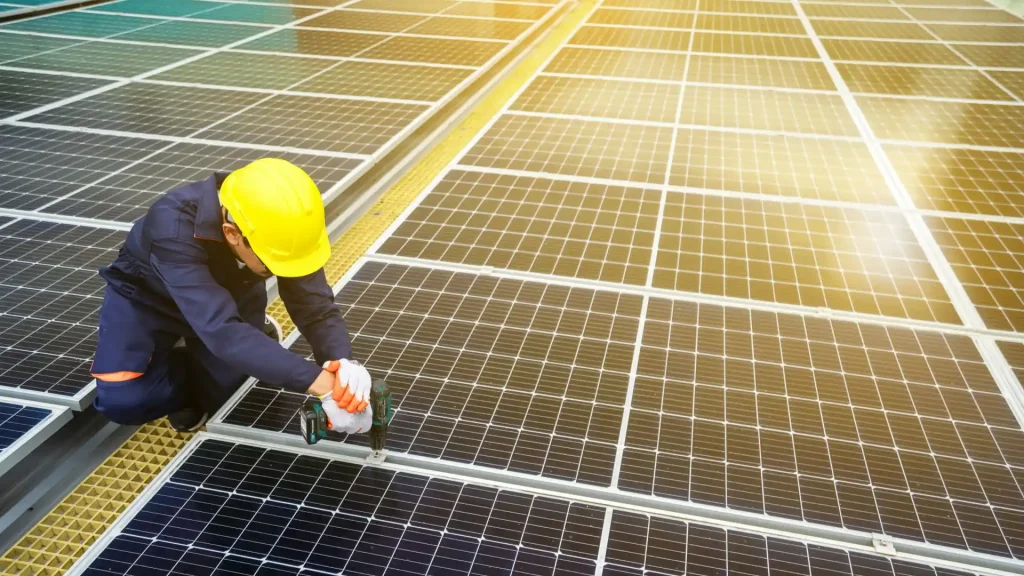
When does it pencil out? Second-story roofs, arrays over 25 panels, steep pitches above 30°, and any homeowner uncomfortable with ladder work. If you wouldn’t feel safe cleaning your gutters, don’t feel safe cleaning your panels.
There is a hybrid approach that often wins. Handle quick ground-level rinses yourself between major cleanings, and hire a service once a year for a thorough deionized-water wash. This keeps your annual cost low while putting trained operators on the riskiest part of the job. The hybrid works especially well for two-story homes in moderately dusty climates.
For a vetted list of providers, see solar panel cleaning company.
Frequently asked questions
How often should I clean my solar panels?
For most US homes, one to two cleanings per year is enough. Arid regions like Phoenix need 2 to 4 cleanings annually. Wet Pacific Northwest climates may need zero to one (NREL, 2023).
Does rain clean solar panels well enough?
In humid regions, mostly yes. Light rain rinses pollen and fine dust. Heavy rain shifts caked-on dirt. In arid climates, rain is rare enough that manual cleaning still matters.
Can I use a pressure washer on solar panels?
No. Pressure washing can delaminate the encapsulant layer and is excluded from most manufacturer warranties. Use a garden hose at low pressure or a water-fed pole brush instead.
What soap is safe for solar panel glass?
Plain deionized water is best. If you need a cleaner, use a single drop of pH-neutral soap per gallon (3.8 L). Avoid household glass cleaners — surfactants damage the anti-reflective coating (IEC, 2023).
Does cleaning solar panels really increase output?
Yes, but the size of the gain depends on how dirty they were. NREL data shows recovery of 0.5% to 8% of annual output, depending on starting soiling level (NREL, 2023).
Should I clean my solar panels myself or hire a service?
DIY works for single-story roofs and ground mounts. Hire a service for steep roofs, second-story arrays, or any panel count above 25. The math favors DIY when access is easy and arrays are small.
Can dirty solar panels void my warranty?
Dirty panels alone don’t void warranties. Damage from improper cleaning, such as pressure washing, abrasive scrubbing, or harsh chemicals, typically does. Read your specific warranty terms before any cleaning, especially if your installer is no longer in business.
When is the best time of day to clean solar panels?
Early morning or late evening, when panels are cool. Avoid midday cleaning, especially in hot weather. Cold water on hot panels causes thermal shock and microcracks.
Do robotic solar panel cleaners work?
They work well at commercial scale. For residential arrays under 50 panels, the $1,500 — $3,500 cost rarely pays back compared to occasional service cleanings.
How much output do solar panels lose if you never clean them?
In typical US residential conditions, expect 1.5% to 6% of annual output loss to accumulated soiling (NREL, 2023). The higher end applies to dry, dusty climates.
Sources
- National Renewable Energy Laboratory. Soiling Loss Research, 2023.
- National Renewable Energy Laboratory. Photovoltaic Reliability Workshop, 2025.
- US Department of Energy, Office of Energy Efficiency and Renewable Energy. Solar Operations and Maintenance Guide, 2024. Retrieved 2026-06-15. https://www.energy.gov/eere/solar/solar-energy-systems
- Occupational Safety and Health Administration. 29 CFR 1926 Subpart M, Fall Protection, 2025 revision. https://www.osha.gov/laws-regs/regulations/standardnumber/1926/1926SubpartM
- International Electrotechnical Commission. IEC 61730, Photovoltaic Module Safety Qualification, 2023. https://webstore.iec.ch/publication/61730
- Industry survey, 2026: EnergySage Marketplace Solar Cleaning Cost Data 2026; Angi Solar Panel Cleaning Cost Guide 2026; HomeAdvisor Solar Cleaning Cost Guide 2026.
Next reads
Two articles in this series go deeper than this guide can. Read them in order if you are still researching, or pick the one that matches your current question.
- how long do solar panels last: Lifespan, warranty interpretation, and the inverter replacement event most articles bury. Start here if your panels are more than 10 years old.
- solar power maintenance costs: What to budget per year, broken down by array size and climate zone. Start here if you are quoting a new system and want to know full lifetime cost of ownership.
About the Author & Disclosures:
By Peter: Peter is a Senior PV & Energy Storage Engineer at Hongyu Supply Chain. As a seasoned expert in the renewable energy industry, he focuses on solar power generation, smart energy storage systems, and clean energy supply chains, delivering valuable technical analysis and industry trend insights to global audiences.
Editorial Declarations:
- Company Focus: Hongyu Supply Chain is a dedicated photovoltaic module manufacturer. We do not provide solar panel cleaning services, nor do we sell any cleaning products.
- Independence: No brand has paid for placement or endorsement in this guide. All pricing information for solar panel cleaning services is sourced strictly from independent, third-party data.
- Financial Disclaimer: This article does not constitute financial or tax advice and is intended for informational purposes only based on third-party market data.