Photovoltaic vs Solar Panels: What Is the Difference? (2026)
Photovoltaic vs solar panels is mostly a terminology question, not a contest between two rooftop products. A photovoltaic panel makes electricity from light. In everyday U.S. use, “solar panel” usually means that same PV module, while the broader term can also include collectors that make heat. Hongyu manufactures PV modules, so this guide separates the technologies before you compare quotes.
Key Takeaways
- PV cells convert sunlight directly into electricity; cells form modules, often called solar panels.
- In 2026, PV solar supplied 54% of new U.S. generating capacity.
- Solar thermal collectors make heat, usually for water or space heating.
- Choose the system that matches the load: electricity, heat, or a carefully designed mix.
Table of Contents
- What Does Photovoltaic Mean?
- Is a PV Panel the Same as a Solar Panel?
- A quick specification glossary
- How Do PV Panels and Solar-Thermal Collectors Work Differently?
- Which System Fits a Homeowner’s Energy Goal?
- What Should You Compare When Buying PV Panels?
- When a PV data sheet gets technical
- PV Panel, Solar Panel, or Full Solar System: What Should You Ask For?
- Frequently Asked Questions
- Is photovoltaic the same as solar?
- Are all residential solar panels photovoltaic?
- Do photovoltaic panels need an inverter?
- Are solar-thermal collectors more efficient than PV panels?
- Can a home use PV and solar thermal together?
- The Bottom Line
- Sources and References
What Does Photovoltaic Mean?
Photovoltaic, usually shortened to PV, describes the semiconductor process that turns light into electricity.
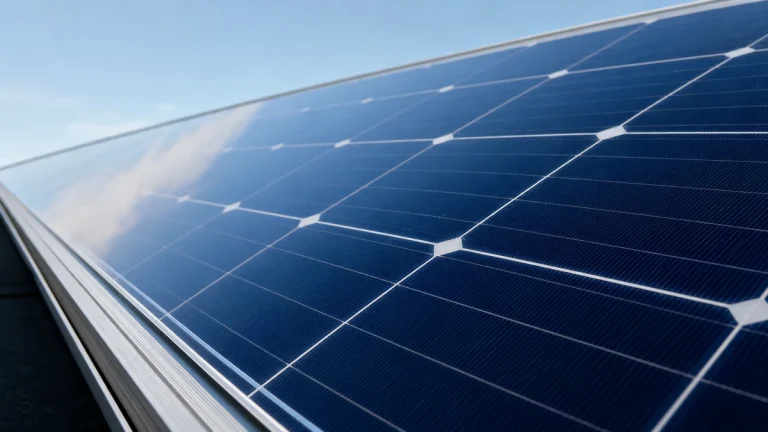
When sunlight reaches a PV cell, some photons are absorbed by the semiconductor. That energy frees electrons, which can move as direct-current electricity. Metal contacts collect the current. An inverter then converts the direct current into the alternating current used by most household equipment.
An individual PV cell typically produces only 1 or 2 watts. Manufacturers wire cells into a module, several modules into an array, and combine that array with racking, conductors, power electronics, protection, and sometimes storage to make a PV system.
The useful distinction is simple: PV is the mechanism, a module is the product, and a solar-electric system is the installation. Asking for a “PV system” therefore means more than asking for panels. It includes how those panels will safely deliver usable electricity.
For a closer look at the device level, see our guide to photovoltaic cells.
Is a PV Panel the Same as a Solar Panel?
The language most homeowners hear: when people say “solar panels,” they usually mean PV modules that make electricity. Technically, though, solar is the wider umbrella.
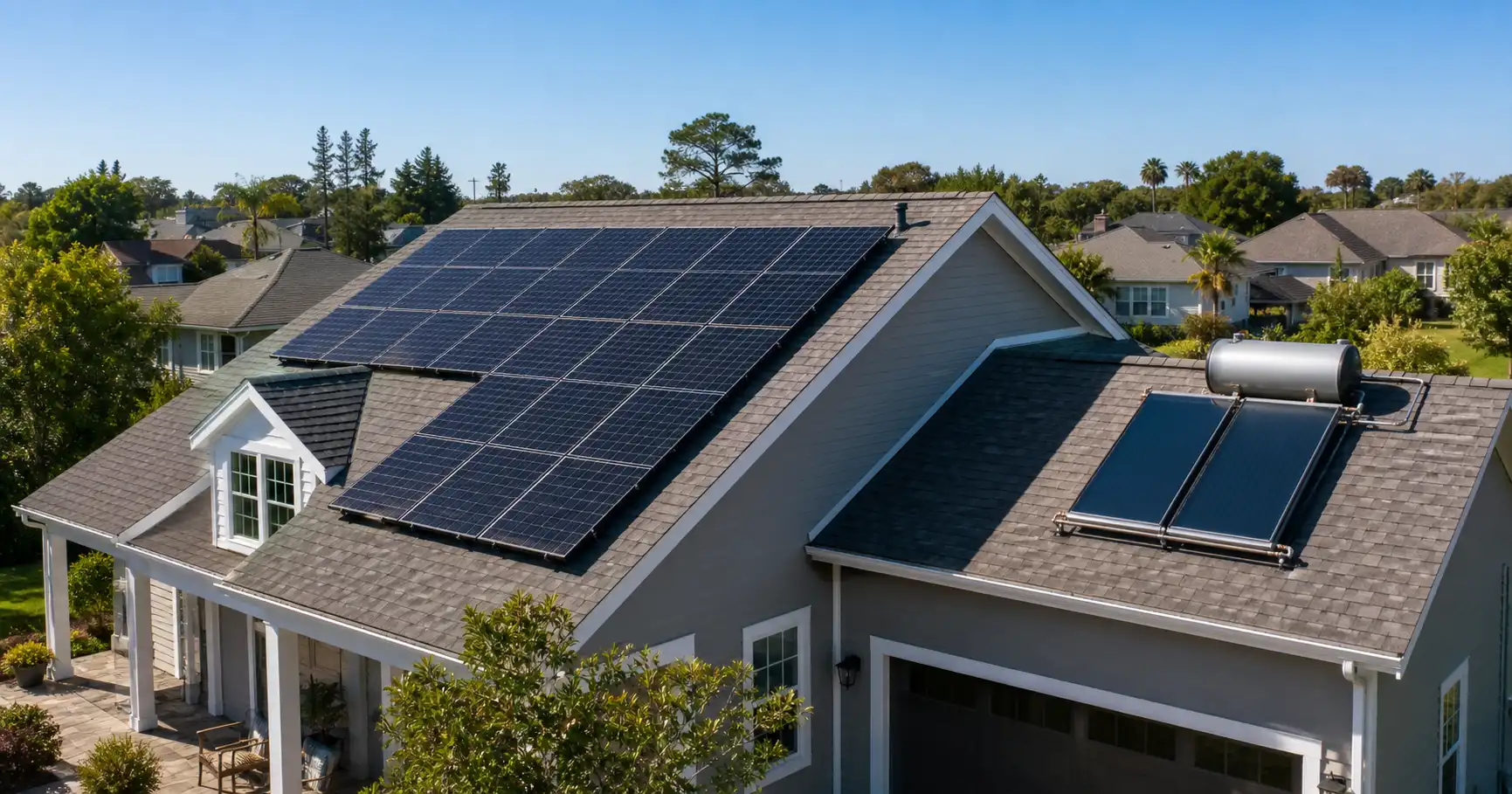
The U.S. Department of Energy identifies photovoltaics and concentrating solar-thermal power as two main solar-energy technology families. A solar-thermal collector does not use the photovoltaic effect. It captures the sun’s heat in a fluid or air stream, then uses that heat for a water or space-heating load.
| Term | What it describes | Main output | Typical residential use |
|---|---|---|---|
| Photovoltaic, or PV | A light-to-electricity process | Direct-current electricity | Generating electric power |
| PV panel or module | A sealed product containing wired PV cells | Direct-current electricity | Rooftop or ground array |
| Solar panel, everyday usage | Usually a PV module | Electricity | Home solar system |
| Solar-thermal collector | A heat-capture product | Heat | Domestic hot water or space heat |
So, are PV panels and solar panels the same? In a typical residential electricity quote–Yes. In a technical specification, write the needed output instead. “PV module” tells a supplier you need electricity-generating equipment. “Solar thermal collector” tells them you need a heat-producing component.
A quick specification glossary
| Term | Why a buyer may see it |
|---|---|
| Cell / laminate / module | The cell converts light; the laminate is the sealed stack; the module is the finished weatherproof product. |
| String / array / combiner | Series-connected modules form a string; strings form an array; a combiner can consolidate circuits. |
| Junction box / bypass diode | The rear junction box encloses terminations. Bypass diodes help limit losses from partial shading. |
| Irradiance / nameplate rating | Irradiance is incoming solar power per area. Nameplate watts are measured under specified test conditions. |
| Temperature coefficient / maximum power point | These describe heat-related power change and the voltage-current operating point that extracts maximum output. |
| Inverter / optimizer / rapid shutdown | Power electronics convert DC, manage module-level output where used, and provide code-required safety functions. |
| Absorber / heat-transfer fluid / heat exchanger | Thermal equipment collects heat in an absorber, moves it with a fluid, then transfers it to water or air. |
| Stagnation / drainback / freeze protection | These thermal-design terms describe high-temperature, drainage, and cold-weather operating conditions. |
See more guide: types of residential solar panels.
How Do PV Panels and Solar-Thermal Collectors Work Differently?
In 2025, global solar-PV electricity generation grew by 620 TWh, the technology’s largest recorded annual increase. PV and solar thermal are different because their useful outputs are different. PV makes electricity. Solar thermal captures heat. A meaningful comparison begins with the energy service a home actually needs.
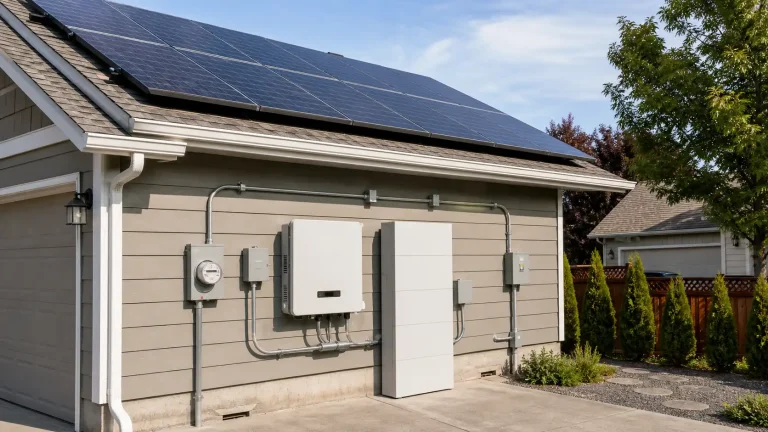
PV modules generate direct current that power electronics convert to alternating current for appliances, batteries, or—where rules allow—the grid. Solar-thermal collectors heat a liquid or air stream for domestic water or space heating; they can require pumps, piping, a heat exchanger, freeze protection, sensors, and thermal storage.
DOE is also assessing photovoltaic-thermal systems, or PVT, which collect heat normally lost from the back of a PV panel. The recovered heat can serve domestic hot water, heated ventilation air, or thermal storage. PVT is a third category, not proof that one standalone technology wins everywhere.
Which System Fits a Homeowner’s Energy Goal?
The practical choice is whether the goal is electricity, heat, or both.
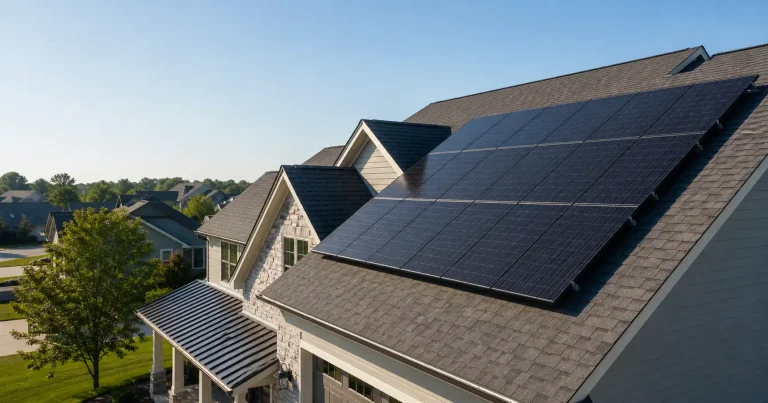
Choose a conventional PV system when you want to supply electric loads, such as lighting, appliances, air conditioning, electric vehicle charging, or battery charging. Start with annual electricity use, roof area, shading, local interconnection rules, and an installer-designed production estimate.
Consider solar thermal when hot water or space heat is the documented primary load. A thermal quote should address climate, freeze protection, piping, storage, backup heat, maintenance, roof area, and heat-pump water-heating alternatives. For both outputs, compare PVT or separate systems against real electric and thermal demand.
Decision rule: Choose PV panels for electricity. Choose solar thermal for a defined heat load. Ask for a modeled system comparison when the home needs both.
For a complete bill-of-materials view, see home solar system components.
What Should You Compare When Buying PV Panels?
Once you know you need electricity, compare verified PV-module and system specifications.
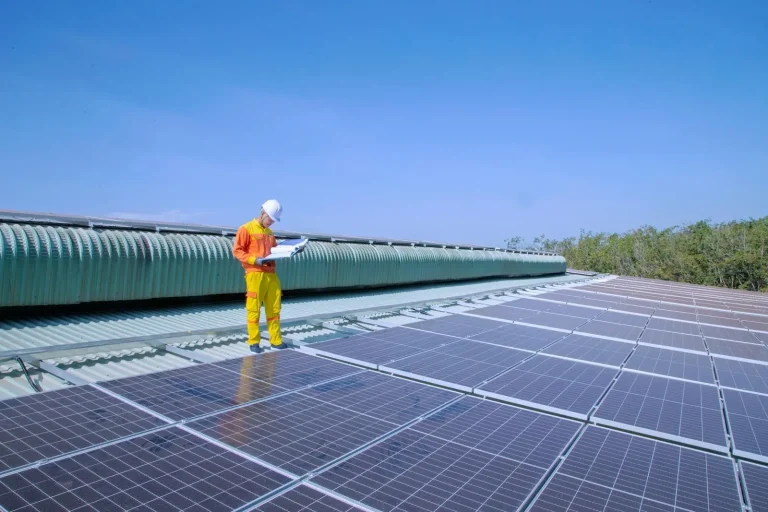
Use a datasheet to assess rated power in watts, module efficiency, dimensions, weight, temperature coefficient, electrical ratings, connector compatibility, and supported mounting method. Then compare the product warranty, performance warranty, degradation terms, and the certification package required for the project.
For U.S. residential work, confirm code, utility, permitting, racking, wiring, and inverter compatibility. High wattage alone does not solve roof-layout, shading, inverter-sizing, or electrical-service constraints.
The specification that often prevents a bad comparison is temperature coefficient. Two modules can share a similar lab efficiency, yet deliver differently on a hot roof. Ask for the data sheet, the proposed layout, and the production model before treating any single number as a verdict.
| PV module check | Why it matters |
|---|---|
| Rated power and efficiency | Sets the starting output and roof-area tradeoff |
| Dimensions and weight | Determines layout and structural requirements |
| Temperature coefficient | Shows expected power sensitivity in hot conditions |
| Product and performance warranties | Defines equipment and output commitments |
| Certification and listing | Confirms project and market requirements |
| Inverter and connector compatibility | Prevents a module-only comparison from hiding system constraints |
When a PV data sheet gets technical
| Datasheet term | Plain-English use in a comparison |
|---|---|
| Monocrystalline / TOPCon / heterojunction | These identify cell architecture, not a universal ranking. Compare the manufacturer’s warranted output and test data. |
| Wafer / busbar / ribbon / solder joint | These describe the silicon slice and current-collection path inside a module. They matter to manufacturing and reliability engineering. |
| Encapsulant / backsheet / edge seal | These protective layers resist moisture ingress, ultraviolet exposure, delamination, and corrosion. |
| Glass-glass / tempered cover glass / antireflective coating | Front and rear materials affect durability, optics, weight, and installation handling. |
| Voc / Isc / Vmp / Imp | Open-circuit voltage, short-circuit current, and maximum-power-point values guide string design and inverter limits. |
| STC / NOCT / NMOT | Standard test conditions and operating-temperature conventions explain why a nameplate rating is not a year-round production promise. |
| PID / LID / LeTID | Potential-induced, light-induced, and light-and-elevated-temperature degradation are distinct long-term performance mechanisms. |
| Bifaciality / albedo / rear-side irradiance | These terms matter when a module can harvest reflected light from a bright roof, ground surface, or canopy. |
| IEC listing / fire classification / mechanical load | Third-party test standards, fire behavior, snow load, wind load, and hail resistance affect project eligibility and risk. |
| MC4-compatible connector / conductor gauge / torque | Connection families, wire size, and fastening specifications must match the approved electrical design. |
| Microinverter / string inverter / optimizer | These are different power-electronics architectures with different serviceability, shade behavior, and monitoring granularity. |
| MPPT / clipping / DC-to-AC ratio | Maximum-power-point tracking, inverter saturation, and array-to-inverter sizing help explain modeled energy yield. |
| Serial number / bill of materials / traceability | Project records connect installed hardware to warranty claims, replacement logistics, and quality-control audits. |
| Additional term | What it means before you sign a proposal |
|---|---|
| PERC / n-type / p-type | These label cell passivation and semiconductor doping approaches. They describe architecture; the warranty and verified performance still decide the offer. |
| Half-cut / shingled / multi-busbar | Cell interconnection formats can influence resistive loss, shade response, current paths, and manufacturing complexity. |
| Cadmium telluride / CIGS / perovskite / tandem | These are alternative thin-film or emerging photovoltaic materials, unlike the dominant crystalline-silicon module. |
| Fill factor / spectral response / quantum efficiency | Laboratory metrics describe how a cell behaves across voltage-current conditions and different wavelengths of light. |
| Azimuth / tilt / row spacing | Array geometry determines sun exposure, self-shading, drainage, wind loading, and usable roof coverage. |
| Soiling / hot spot / mismatch | Dirt, localized heating, and unequal module output can reduce production and require targeted diagnostics. |
| I-V curve / flash test / electroluminescence | Factory and field tests can reveal output, abnormal cells, microcracks, and interconnection defects. |
| Infrared thermography / insulation resistance | Commissioning inspections can identify hot components, damaged conductors, moisture pathways, or grounding faults. |
| Arc-fault protection / ground-fault detection / anti-islanding | Safety functions limit hazardous faults and stop grid export when utility service is unavailable. |
| Power factor / reactive power / grid services | Inverters may support voltage and frequency functions required by a utility interconnection agreement. |
| Net billing / net metering / export limit | Local tariff rules determine how surplus kilowatt-hours are credited, curtailed, stored, or exported. |
| Single-line diagram / permit set / placard | These project documents show electrical routing, equipment ratings, disconnect locations, and required labels. |
| EPC / distributor / OEM | An engineering-procurement-construction contractor installs the project; distributors and original manufacturers supply equipment. |
| Factory acceptance / incoming inspection / sampling plan | Procurement controls verify identity, packaging, appearance, serials, and documentation before deployment. |
| RMA / warranty claimant / labor allowance | Warranty language should identify return procedures, evidence requirements, replacement timing, and who pays removal labor. |
| Bankability / escrow / product-liability insurance | Larger buyers may evaluate supplier solvency, contractual security, and risk-transfer arrangements alongside module data. |
Explore monocrystalline solar panels and bifacial solar modules after you have this baseline.
PV Panel, Solar Panel, or Full Solar System: What Should You Ask For?
PV system is more than its modules: mounts, wiring, power electronics, and other equipment turn panel output into usable household power. The right request depends on whether you need a physical product, an electrical design, or a thermal-heating design.
Use one of these phrases when you ask for information:
- “I need a residential PV module data sheet with the current power class, dimensions, warranty, and certification details.”
- “I need a grid-connected solar PV system design, including module layout, inverter, racking, electrical scope, and production estimate.”
- “I need a solar-thermal assessment for domestic hot water, including collector type, storage, freeze protection, backup heat, and maintenance.”
That vocabulary keeps the conversation tied to a real output. It also makes a quote easier to audit. What are you paying for: a module, an installed electric system, or a heat-producing water-heating system?
Frequently Asked Questions
Is photovoltaic the same as solar?
Photovoltaic is one solar technology. It converts light directly into electricity. Solar is the broader label that can include PV and solar-thermal technologies. In 2025, the IEA recorded 620 TWh of new global PV generation, which shows how dominant the electricity-producing branch has become.
Are all residential solar panels photovoltaic?
Most panels sold for home electricity are photovoltaic modules. A solar-thermal collector is also a solar device, but it delivers heat rather than electricity. DOE states that a single PV cell typically produces only 1 or 2 watts, so many cells are combined into a residential module.
Do photovoltaic panels need an inverter?
PV modules produce direct-current electricity. Typical U.S. homes use alternating current, so a grid-connected system needs an inverter or other appropriate power electronics. DOE identifies the inverter as a key device that converts PV-generated DC electricity into AC electricity for the grid and household loads.
Are solar-thermal collectors more efficient than PV panels?
They do different work, so one percentage cannot answer that question. A thermal collector measures heat capture; a PV module measures electricity conversion. The IEA projects solar-thermal heat consumption in buildings will grow 25% between 2025 and 2030, but that does not make it a substitute for an electricity-generating PV array.
Can a home use PV and solar thermal together?
Yes. A home can use separate PV and thermal equipment if the design supports both loads. DOE is also studying PVT systems that recover heat from PV panels for hot water, ventilation air, or thermal storage. That design must be compared against separate systems using the home’s actual roof area and demand profile.
The Bottom Line
Photovoltaic panels are solar panels when the panel’s job is to make electricity. The wording only becomes different when solar refers to a broader family that includes heat-producing thermal collectors. Use PV for electricity, solar thermal for a defined heat load, and a solar-system request when you need the full engineered installation.
Before comparing module quotes, ask for current data sheets, verified certifications, warranties, and a design that fits the home. Hongyu can provide PV-module documentation for qualified buyers and work with installer partners on the next system-design conversation.
Sources and References
- U.S. Department of Energy, Solar Photovoltaic Cell Basics
- U.S. Department of Energy, Solar Photovoltaic Technology Basics
- U.S. Department of Energy, Solar Energy
- U.S. Department of Energy, Technology and Market Potential of Photovoltaic-Thermal Systems in the United States
- U.S. Department of Energy, Solar Integration: Inverters and Grid Services Basics
- Solar Energy Industries Association, Solar Market Insight Report 2025 Year in Review
- International Energy Agency, Electricity 2026: Supply
- International Energy Agency, Global Energy Review 2026
- International Energy Agency, Renewables 2025: Renewable Heat
- National Laboratory of the Rockies, PV Lifetime Project – 2025 Annual Report
Disclosure: Hongyu manufactures photovoltaic modules. It is not electrical, structural, plumbing, permitting, tax, or legal advice. Final product selection and installation should be confirmed by qualified professionals.
By Peter: Peter is a Senior PV & Energy Storage Engineer at Hongyu Supply Chain. As a seasoned expert in the renewable energy industry, he focuses on solar power generation, smart energy storage systems, and clean energy supply chains, delivering valuable technical analysis and industry trend insights to global audiences.