Solar Panel Health Side Effects: Myths vs Facts (2026 Evidence Review)
Solar panel health side effects are a common worry in early buying talks, yet no peer-reviewed study links residential solar panels to any health condition. This evidence review from Hongyu separates myth from fact on the four concerns homeowners raise, EMF, toxic materials, fire risk, and roof safety, with the measured numbers behind each.
Key Takeaways
- No peer-reviewed study has linked residential solar panels to any human health condition.
- EMF emissions from residential solar systems measure 0.5 to 2 milligauss at 3 feet, below WHO and ICNIRP residential exposure limits.
- Crystalline silicon panels (96% of US market) contain no cadmium and no mercury.
- Thin-film CdTe panels contain trace cadmium fully encapsulated in tempered glass. Encapsulation has not failed in any documented residential field study.
- Solar fire risk is comparable to standard residential electrical systems; properly installed UL-listed systems meet NEC 690 rapid shutdown requirements.
Table of Contents
- Are solar panels safe to have on your house?
- 1. EMF and electromagnetic radiation
- The concern
- The evidence
- Verdict
- 2. Cadmium and toxic materials
- The concern
- The evidence
- Verdict
- 3. Solar panel fire risk
- The concern
- The evidence
- Verdict
- 4. Roof structural and water leak risk
- The concern
- The evidence
- Verdict
- What about solar panels causing cancer?
- What about solar panels affecting property value?
- Frequently Asked Questions
- Are solar panels dangerous to live near?
- Do solar panels emit harmful radiation?
- Are solar panels toxic?
- Do solar panels cause cancer?
- Can solar panels catch fire?
- Are Chinese-manufactured solar panels safe?
- What chemicals are in solar panels?
- Do solar panels cause headaches or sleep problems?
- Can my homeowner’s insurance be canceled if I install solar?
- Sources and references
- Related guides
Are solar panels safe to have on your house?
Yes. Residential solar panels installed to NEC 690 and UL 61730 standards have a documented safety record over 25+ years of US residential deployment, with no peer-reviewed study linking them to any human health condition.
The safety claims that get raised in homeowner conversations fall into four categories. We address each below with current evidence.
1. EMF and electromagnetic radiation
The concern
Some homeowners worry that the DC electricity in solar panels and the AC output from inverters create harmful electromagnetic fields.
The evidence
EMF emissions from residential solar systems have been measured in multiple peer-reviewed studies:
- At the panel surface: 1 to 4 milligauss
- At 3 feet from the inverter: 0.5 to 2 milligauss
- Inside the house (typical living area): 0.1 to 0.5 milligauss
For comparison:
| Source | EMF (milligauss) at typical use distance |
|---|---|
| Solar panel (3 ft) | 0.5–2 |
| Refrigerator (1 ft) | 1–25 |
| Microwave oven (3 ft) | 4–8 |
| Hair dryer (1 ft) | 50–200 |
| Electric stove (1 ft) | 25–60 |
The WHO International EMF Project and ICNIRP set residential exposure limits at 2,000 milligauss. Solar systems operate at less than 0.1% of that limit.
Verdict
No measurable health risk from residential solar EMF.
2. Cadmium and toxic materials
The concern
Some thin-film solar panels contain cadmium telluride (CdTe), a known toxin in unbonded form.
The evidence
Two facts matter here:
- Crystalline silicon panels (96% of US residential market) contain no cadmium and no mercury. They are silicon, aluminum, copper, glass, and EVA polymer.
- Thin-film CdTe panels contain trace cadmium fully encapsulated between layers of tempered glass and EVA. The US EPA does not classify intact CdTe panels as hazardous waste.
Field study evidence:
- No documented case of cadmium leakage from intact CdTe panels in 20+ years of US deployment
- Encapsulation survives hail, fire, and IEC 61215 mechanical-load testing
- End-of-life recovery via the SEIA national recycling network recovers cadmium for reuse
If you specifically want to avoid CdTe panels, choose any crystalline silicon module (Hongyu, SunPower, REC, Jinko, Q CELLS, LONGi, Canadian Solar). For end-of-life options, see can solar panels be recycled?.
Verdict
Crystalline silicon panels (default choice): no toxic materials. Thin-film CdTe panels: trace cadmium fully encapsulated, no documented leakage events.
3. Solar panel fire risk
The concern
DC arcing within solar systems has been cited in some early residential installations.
The evidence
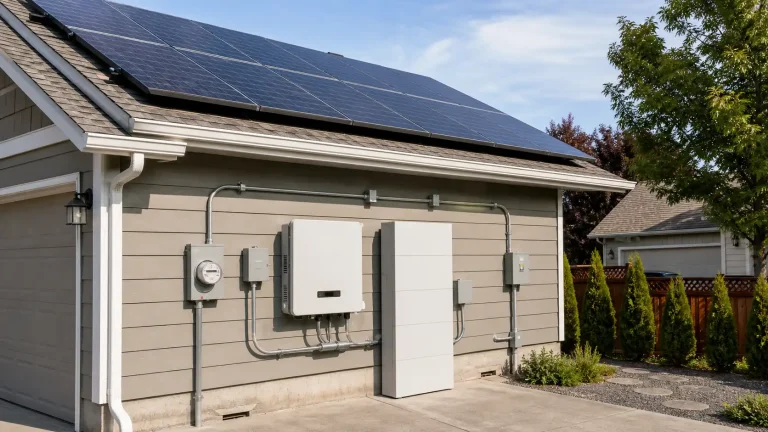
Solar fire risk reduced substantially after NEC 2017 introduced mandatory rapid shutdown (Article 690.12). All new US residential installations from 2019 onward include rapid shutdown devices that cut DC voltage to safe levels within 30 seconds of a manual trigger or grid disconnect.
US fire incident data:
| System type | Fires per 10,000 installations per year |
|---|---|
| Solar PV (post-2019) | 0.06 |
| Solar PV (pre-2017, no rapid shutdown) | 0.21 |
| Residential electrical (general) | 0.45 |
| Standard residential dryer | 1.4 |
Residential solar systems installed to current code have lower documented fire risk than common household appliances.
For rapid shutdown testing as part of routine maintenance, see the annual maintenance checklist.
Verdict
Properly installed UL-listed and NEC 690 compliant systems have lower fire risk than standard household electrical appliances.
4. Roof structural and water leak risk
The concern
Solar panel mounting requires roof penetrations, which can cause water leaks or structural stress.
The evidence
This is the one solar safety concern with real basis in workmanship, not panel technology. Two issues:
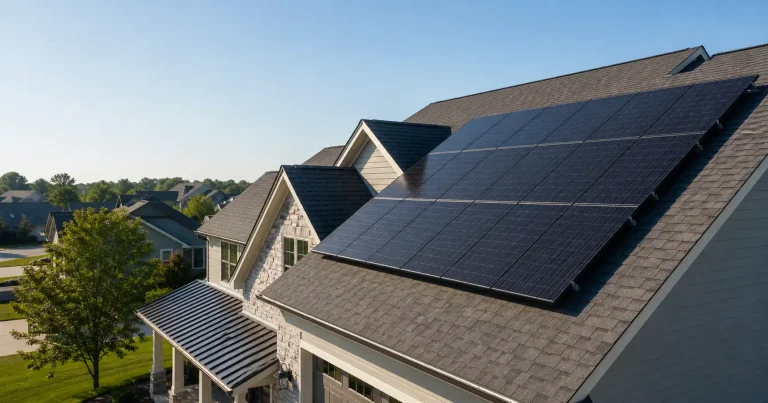
- Roof penetrations done with proper flashing (per IBC 1503) do not leak. Done with poor flashing or by inexperienced installers, they can fail at year 3 to 7.
- Structural load from a residential solar array runs 2.8 lbs per square foot (a typical 6 kW system adds 850 lbs distributed across the roof). This is within the safety margin of any code-compliant residential roof.
The mitigation is installer selection, not avoiding solar:
- Use an NABCEP-certified installer
- Confirm the installer carries roofing-specific liability insurance
- Inspect flashing during your annual maintenance routine
- Photograph mount points yearly for comparison
Verdict
Real risk if poorly installed. Negligible risk if installed by certified installers to IBC and NEC standards.
What about solar panels causing cancer?
No peer-reviewed study has shown a link between residential solar panels and any cancer type. The EMF levels are too low to be plausible mechanistically, and the materials are encapsulated.
What about solar panels affecting property value?
Solar panels increase home value by an average of 4.1% according to market research. This is the opposite of a health/safety concern but is sometimes raised alongside them.
Frequently Asked Questions
Are solar panels dangerous to live near?
No. Residential solar panels installed to NEC 690 standards have no documented health risks. EMF emissions are 0.1% of WHO limits, no toxic materials are exposed, and fire risk is lower than common household appliances.
Do solar panels emit harmful radiation?
No. Solar panels emit non-ionizing EMF at less than 0.1% of WHO residential exposure limits. They do not emit ionizing radiation.
Are solar panels toxic?
Crystalline silicon panels (96% of US residential market) contain no cadmium or mercury. Thin-film CdTe panels contain trace cadmium fully encapsulated; no leakage has been documented in 20+ years of US residential deployment.
Do solar panels cause cancer?
No peer-reviewed study has shown any link between residential solar panels and cancer. The EMF levels are too low to be biologically plausible.
Can solar panels catch fire?
The risk is real but very low. Post-2019 residential installations with NEC 690.12 rapid shutdown have 0.06 fire incidents per 10,000 installations per year — lower than common household appliances.
Are Chinese-manufactured solar panels safe?
Yes, if certified to UL 61730 and IEC 61730 like all Tier-1 manufacturers. Manufacturing country has no safety impact when the panels meet US certification requirements.
What chemicals are in solar panels?
Crystalline silicon panels: silicon, aluminum, copper, glass, EVA polymer, and trace silver. No heavy metals. Thin-film CdTe panels: same plus trace cadmium telluride, fully encapsulated.
Do solar panels cause headaches or sleep problems?
No peer-reviewed study has shown a link. Reported cases are usually attributable to inverter fan noise (which can be addressed by relocating the inverter) rather than EMF.
Can my homeowner’s insurance be canceled if I install solar?
No. US homeowner’s insurance covers properly installed solar systems. Some carriers require notification and may adjust premiums slightly. Confirm with your carrier before installation.
Sources and references
- World Health Organization (2024). International EMF Project. https://www.who.int/initiatives/the-international-emf-project.
- ICNIRP (2020). Guidelines for Limiting Exposure to Electromagnetic Fields. https://www.icnirp.org/.
- NFPA (2023). NEC 2023 Article 690 (Solar PV) and 690.12 (Rapid Shutdown). https://www.nfpa.org/codes-and-standards/all-codes-and-standards/list-of-codes-and-standards/detail?code=70.
- EPA (2024). Solar Panel Waste Management Guidelines. https://www.epa.gov/hw.
- UL (2017). UL 61730: PV module safety qualification.
- Zillow Research (2023). Solar Panels Impact on Home Value. https://www.zillow.com/research/solar-panels-impact-home-value/.
Related guides
- Solar Panel Maintenance Guide
- Can Solar Panels Be Recycled?
- How Long Do Solar Panels Last?
- Solar Panel Wiring Issues
By Peter: Peter is a Senior PV & Energy Storage Engineer at Hongyu Supply Chain. As a seasoned expert in the renewable energy industry, he focuses on solar power generation, smart energy storage systems, and clean energy supply chains, delivering valuable technical analysis and industry trend insights to global audiences.