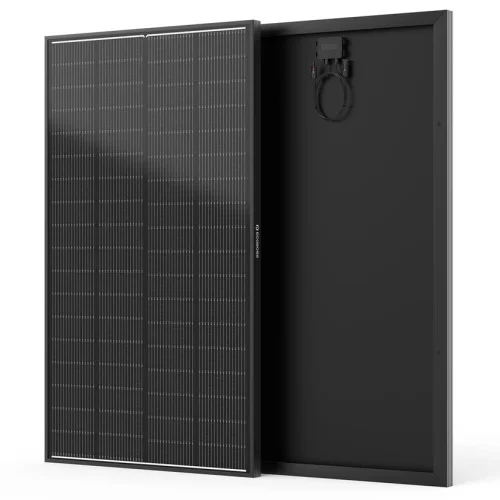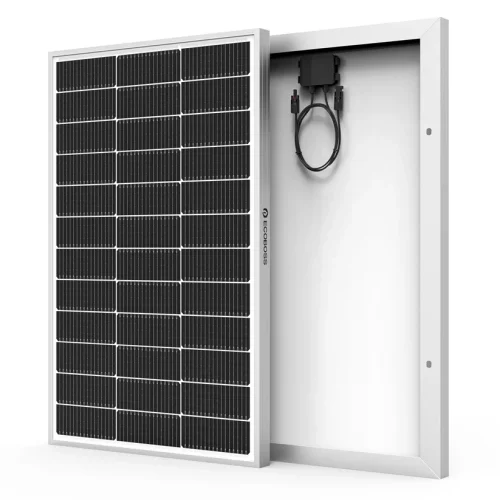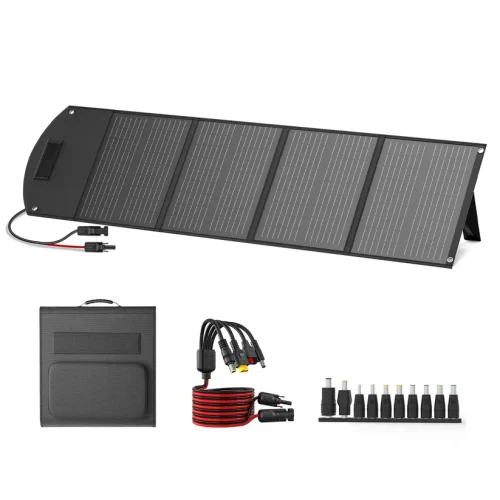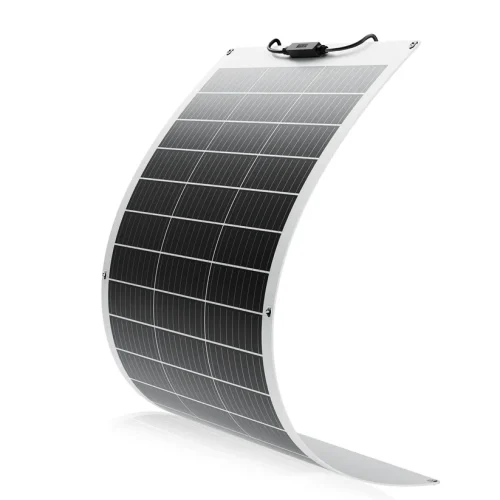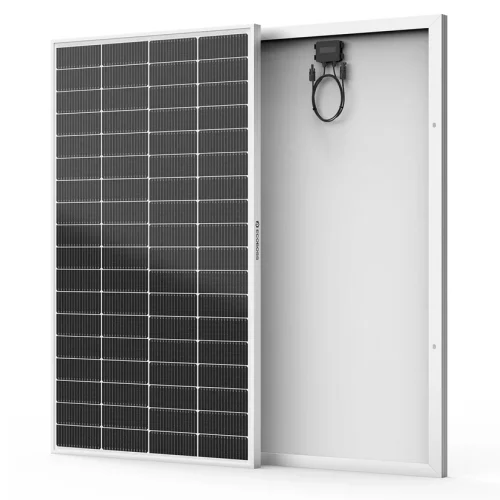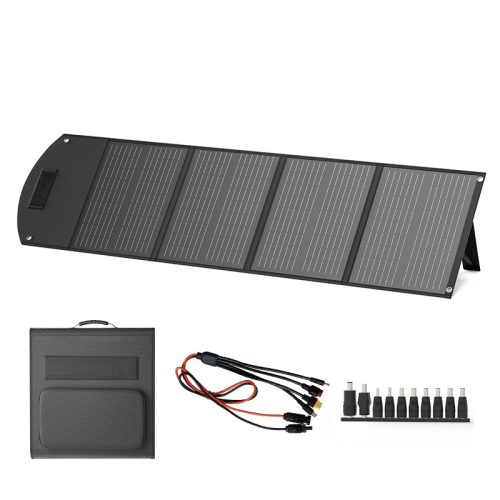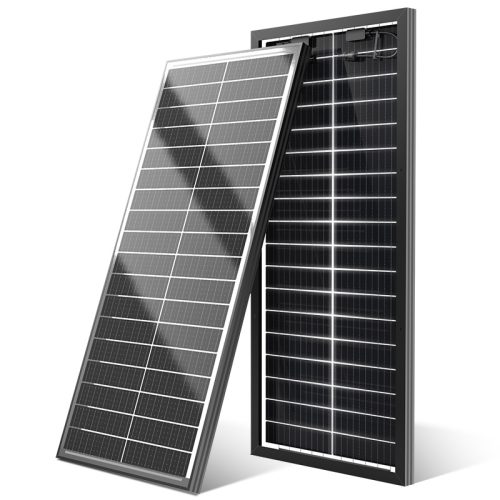
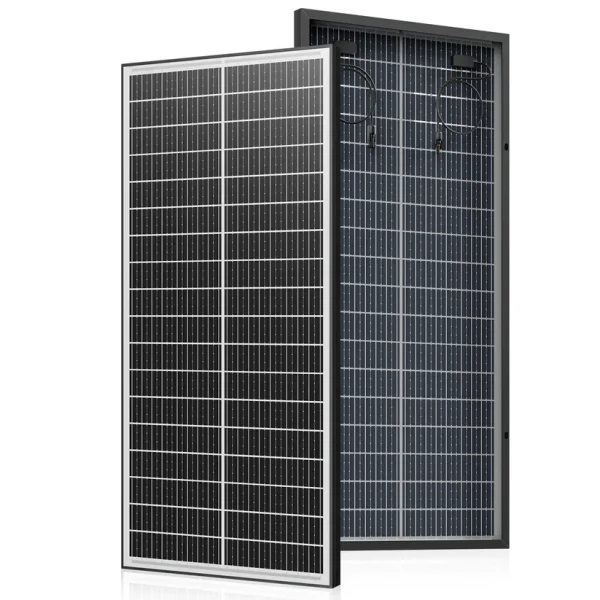



Bifacial Solar Panel
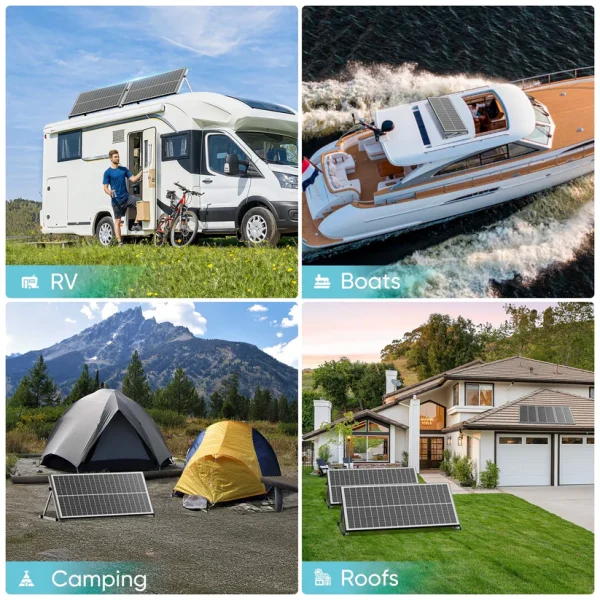
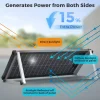
Power up your adventures with this compact 100 Watt Bifacial Monocrystalline Solar Panel, engineered with weatherproof durability and dual-sided technology that harvests reflected sunlight to boost energy efficiency by up to 24% for camping, RVs, and portable power stations.
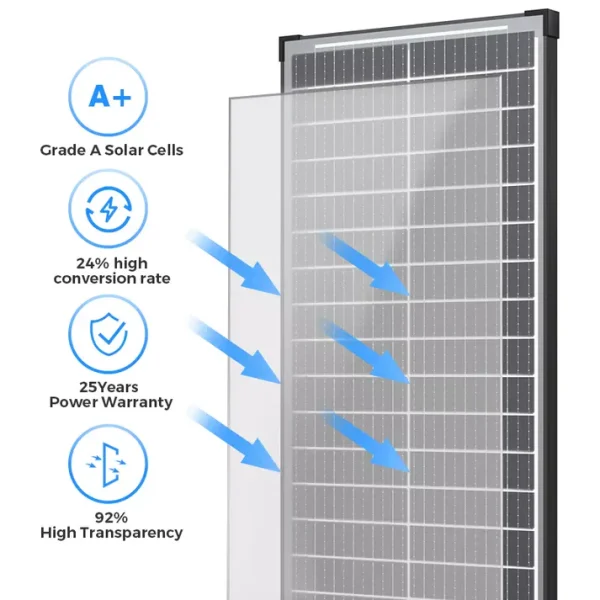
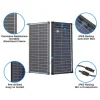
● Grade A solar cell, 12BB, 24% conversion.
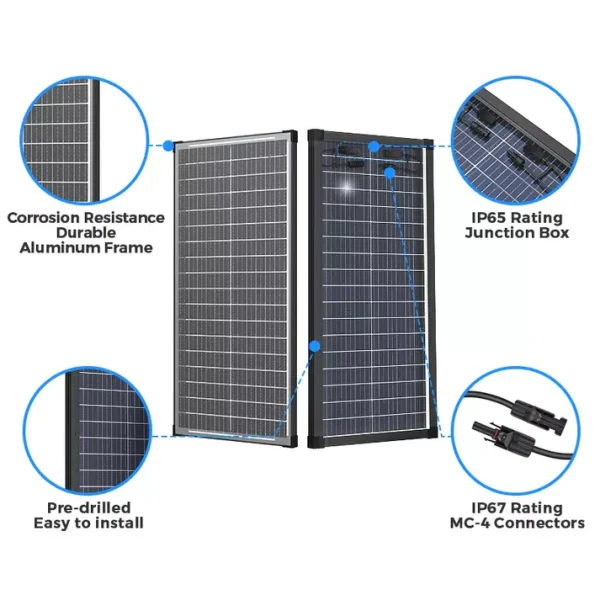
● Aluminum frame, strong and durable.
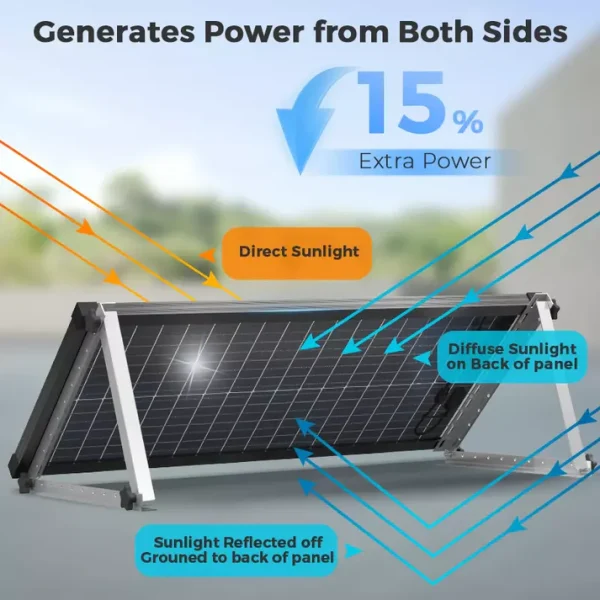
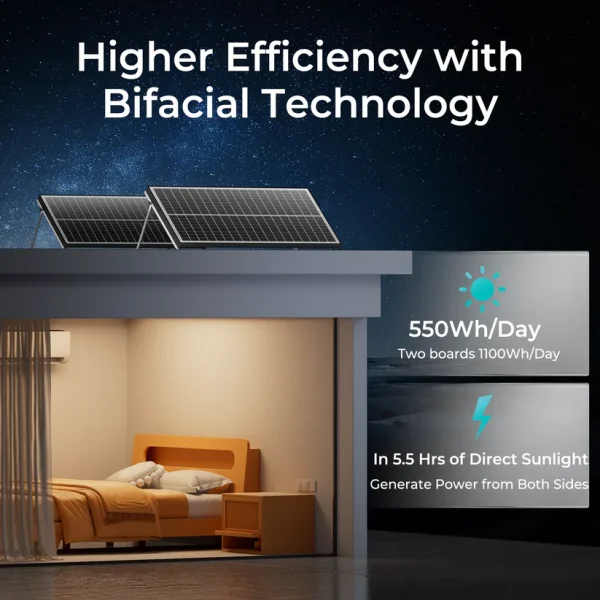
● 10-15% more energy, capturing sunlight on both sides and generating electricity on both sides.
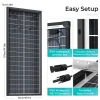
● Reserved mounting holes, easy to install.
● Saves energy even in partial shade.
24% High Conversion Efficiency
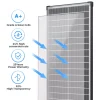
High conversion efficiency solar panels continue to deliver better performance and adapt to a wider range of climate conditions.
Dual-Sided Solar Panels
Maximize solar efficiency and save more on your energy bills
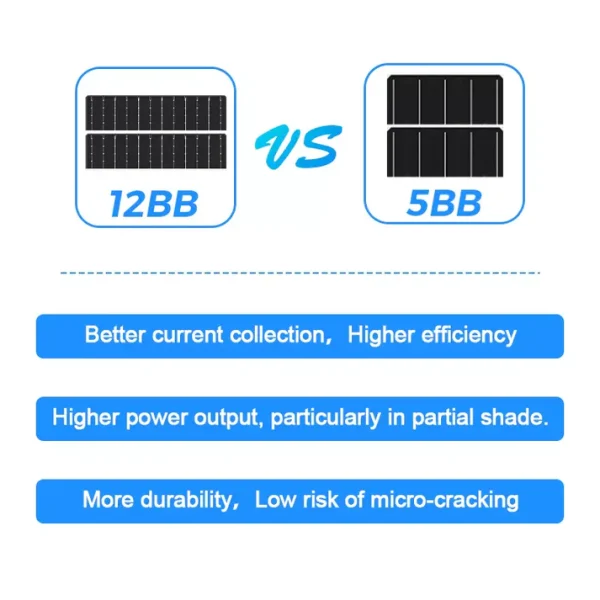
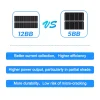
Upgraded 12BB Solar Panel
The upgraded 12BB design performs better in low-light conditions, ensuring steady energy production even during cloudy or overcast days.
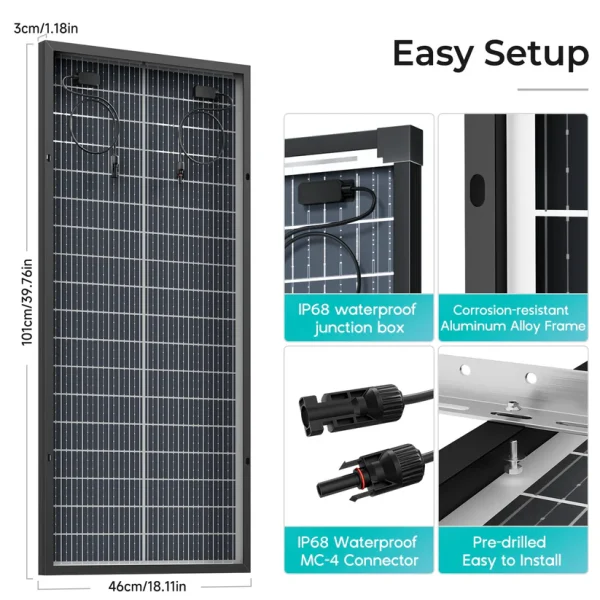
Product Size
Built for Excellence, Designed for the Future
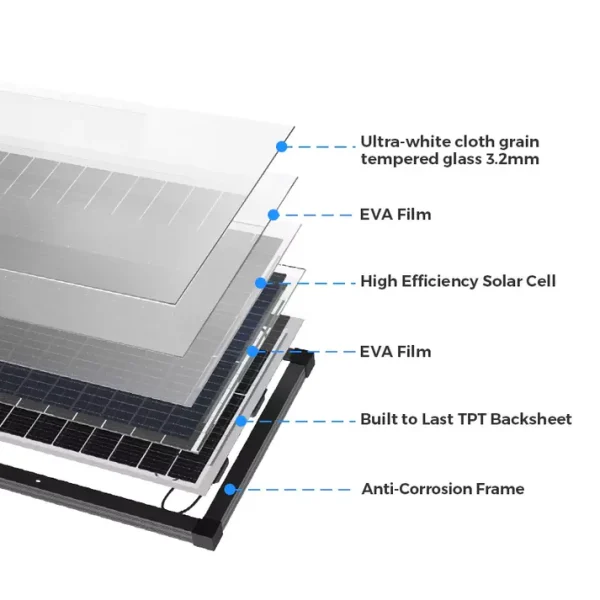
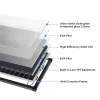
We use top-quality materials to manufacture our solar panels, rigorously tested to ensure optimal performance in all conditions, meeting long-term durability requirements.
SPECIFICATIONS
Electrical Characteristics (STC: 1000W/㎡, 25℃, AM1.5)
| Maximum Power (Pmax): | 100W |
| Open Circuit Voltage (Voc): | 23.4V |
| Short Circuit Current (Isc): | 5.64A |
| Voltage at Pmax (Vmp): | 19.5V |
| Current at Pmax (Imp): | 5.13A |
| Module Efficiency: | 21.5% |
| Power Tolerance: | (0, +3W) |
| Maximum System Voltage: | 1000V |
| Maximum Series Fuse Rating: | 20A |
Temperature Characteristics
| Pmax Temperature Coefficient: | -0.40%/°C |
| Voc Temperature Coefficient: | -0.32%/°C |
| Isc Temperature Coefficient: | +0.05%/°C |
| Operating Temperature: | -40~+85°C |
| Nominal Operating Cell Temperature (NOCT): | 45±2°C |
Mechanical Specifications
| Dimensions: | 1010 × 460 × 30 mm |
| Weight: | 4.9 kg |
| Solar Cells: | Monocrystalline 210×52.5mm (36 pcs) |
| Front Glass: | 3.2mm Tempered Glass, Low Iron |
| Frame: | Anodized Aluminum Alloy |
| Junction Box: | IP68 Rated |
| Mechanical Load: | 5400 Pa |
| Output Cables: | 4.0mm² × 900mm |
| Connector: | MC4 Compatible |
Frequently Asked Questions
What does “bifacial” mean and why does it matter?
A bifacial solar panel is designed to capture sunlight on both the front and the back sides, thereby increasing energy generation compared to standard monofacial panels. This means when properly installed (with reflective surface or elevated mount), you can gain additional output from the rear side of the module.
How much power can I expect from a 100 W bifacial panel in real-world use?
Under ideal conditions (full sun, optimal angle, reflective surface underneath), a 100 W rating means you might produce roughly 100 W at peak. In real daily conditions (say 5 hours of peak sun) you could see ~0.5 kWh or more, depending on site, tilt, temperature, and rear-side reflection. For bifacial panels, the actual output gain depends heavily on installation conditions.
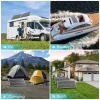
Is this panel suitable for RVs, boats, off-grid cabins and mobile use?
Yes. The 100 W size makes it flexible for smaller systems like RVs, marine vessels, tiny homes or off-grid cabins. Because it’s bifacial, you also benefit if you can mount it so the backside sees some reflected light (for example on a light ground surface or raised structure).
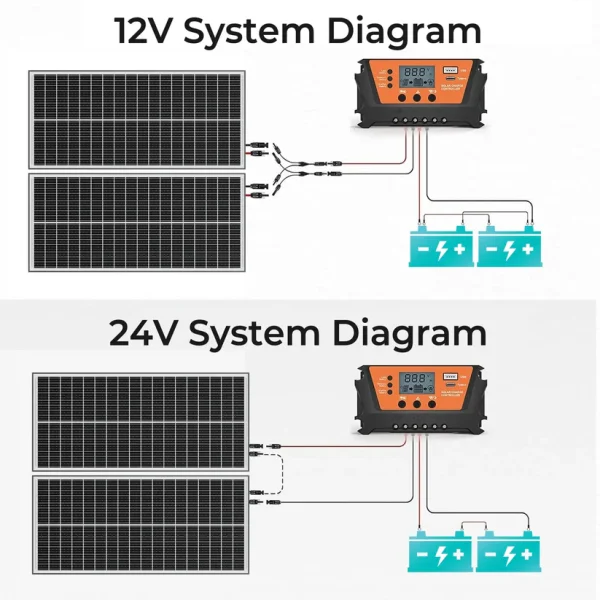
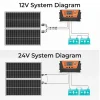
What system voltage options are supported and how should I connect this 100 W panel?
Typically the panel is rated for a 12 V nominal system (or optionally 24 V depending on version). You should connect it to an MPPT charge controller properly sized for the voltage and current. If you plan to use multiple such panels, ensure you parallel or series correctly depending on your battery bank and controller specs.
What about compatibility with existing systems (batteries, controllers, inverters)?
The panel uses standard MC4 connectors (or equivalent) and can be integrated into off-grid systems or those paired with batteries/inverters. Just ensure the panel’s voltage and current output are matched to your controller and battery bank. If using the bifacial advantage, ensure mounting and wiring reflect the expected higher yield properly.
How does performance vary in non-ideal conditions (cloudy, low sun, shaded)?
While this 100 W panel will still generate power in less than ideal conditions (diffuse light, partial cloud), output will be lower than peak. Because it’s bifacial, rear-side capture may slightly improve performance in diffuse/reflected light conditions—but the gain is dependent on installation.
Is this panel cost-effective compared to a standard monofacial 100 W panel?
Yes — especially if you can make use of the rear-side energy by mounting it to exploit reflected light. Bifacial technology can produce more energy in the same footprint, boosting yield and reducing pay-back time. However, if the rear side is completely blocked (e.g., flush roof mount with no reflection), the added cost may not justify the benefit.
Customize Your PV & Energy Storage Solutions Now!
Connect directly with our factory to obtain the best packaged price for solar panels and LiFePO4 battery packs, as well as OEM manufacturing lead times.
- One-Stop Procurement
- Full OEM/ODM Services
- Strict NDA Protection
We offer leading solar panels and long-life lithium battery. Start your renewable energy journey and get a one-stop pv energy storage solution today!